An organization’s GitHub inventory does not cover personal repositories where a contributor or agent placed review artifacts. Extending attack-surface mapping requires following relationships between people, projects and published objects.
This method applies only to accounts and projects the organization is authorized to examine. It extends forgotten-asset mapping using the data path studied in Glow Labs’ PixelLeak research. It does not claim exhaustive Web coverage.
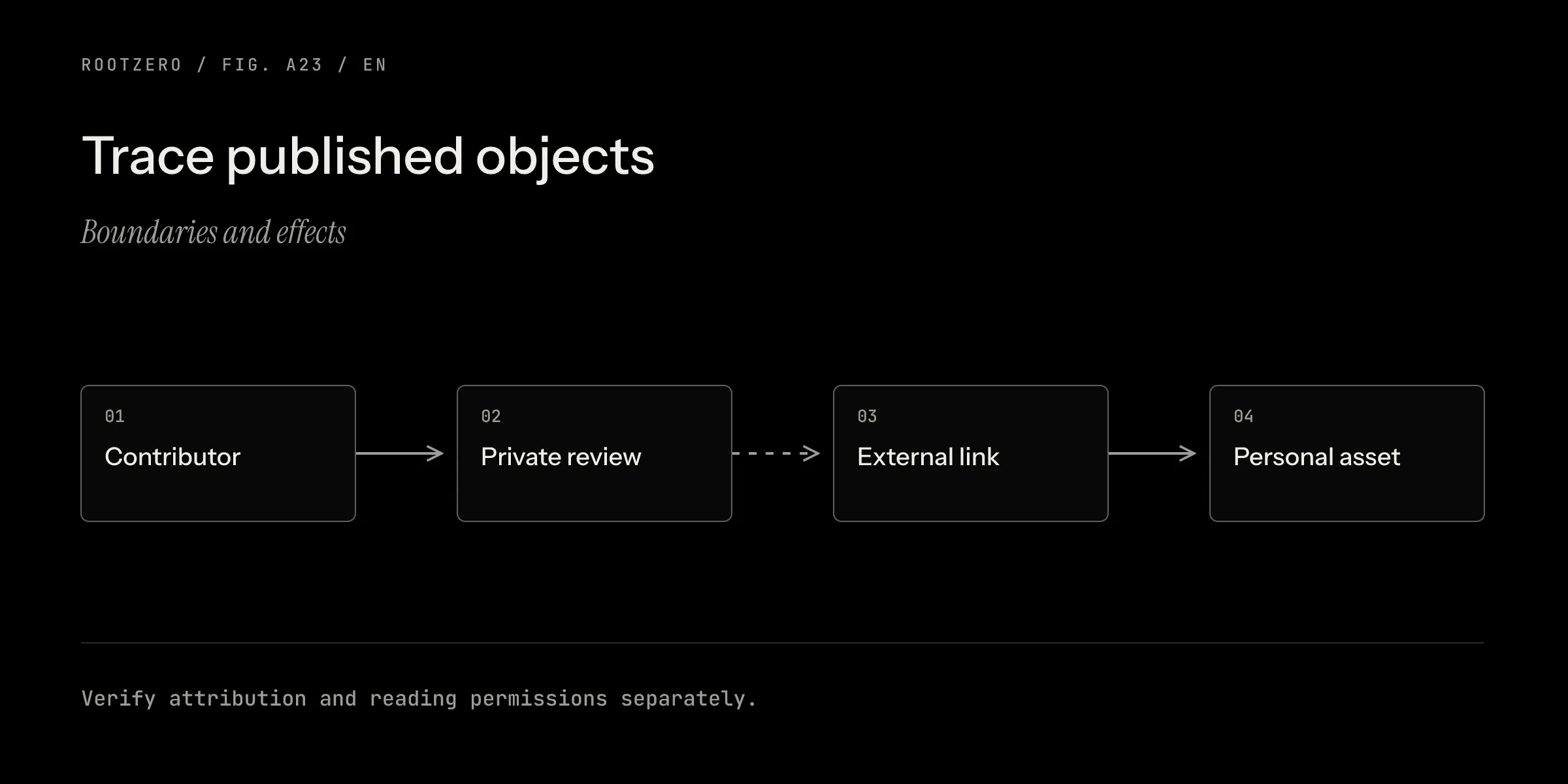
Verify attribution and reading permissions separately.
Build a verifiable identity list
A username resembling an employee’s name is insufficient attribution. Use identities declared in the project, review authors and documented automation accounts. Departures and account changes also create periods to examine.
Retain the attribution source. A contributor-supplied link and a similar nickname have different evidential weight. Unknown ownership should remain an investigation item rather than a permanent association.
Follow review links
Start with your own pull requests, tickets and reports. Extract image, recording and file URLs, then group objects by service and owner.
| Object | Separate verification |
|---|---|
| Repository image | History, branch and repository visibility |
| Release asset | Asset read permissions and direct link |
| Gist | URL-based access and ownership |
| Third-party storage | Sharing audience and anonymous access |
GitHub’s release-assets API treats assets as separate resources. A missing PNG in the current file tree therefore does not establish that it was never shared.
Separate exposure from exploitation
An anonymous response delivering the file establishes accessibility at the time of inspection. It does not establish the first public-access date, an adversarial download or the number of copies.
An observation record should retain URL, time, file hash and request context. Avoid attaching sensitive images to widely visible tickets. A minimal description and a reference to privately stored evidence allow discussion without duplicating the data.
This fictional correlation illustrates the sequence:
private PR 42 -> release asset 17
asset 17 -> personal repository attributed through contributor declaration
anonymous read -> file retrieved at inspection time
impact -> to assess after examining the contents
That sequence prevents an external URL from immediately becoming a claim of customer-data theft.
Handle derived objects
If a screenshot contains a token, removing it addresses distribution; revoking the token addresses access. Track them separately. Recordings, thumbnails and history may retain the same contents.
To prevent repetition, define an approved review destination and an explicit failure behavior when upload is impossible. The agent’s identity should not allow it to freely create an alternative public destination to complete the task.
The result is a list of attributed objects, observed rights and recorded decisions. Unperformed searches remain visible as such. A dated, verifiable inventory is more useful for remediation than a count combining presumed accounts, dead links and retrievable files.