A VM separates an agent’s execution environment from the host. It does not define which destinations the agent can reach. A VM with Internet routing, internal network access and cloud credentials can still transfer data over permitted channels.
This proposed protocol evaluates outbound paths with synthetic markers. It reports no VM measurements performed for this dossier. Its intended output is a matrix of observed paths, denials and measurement limits.
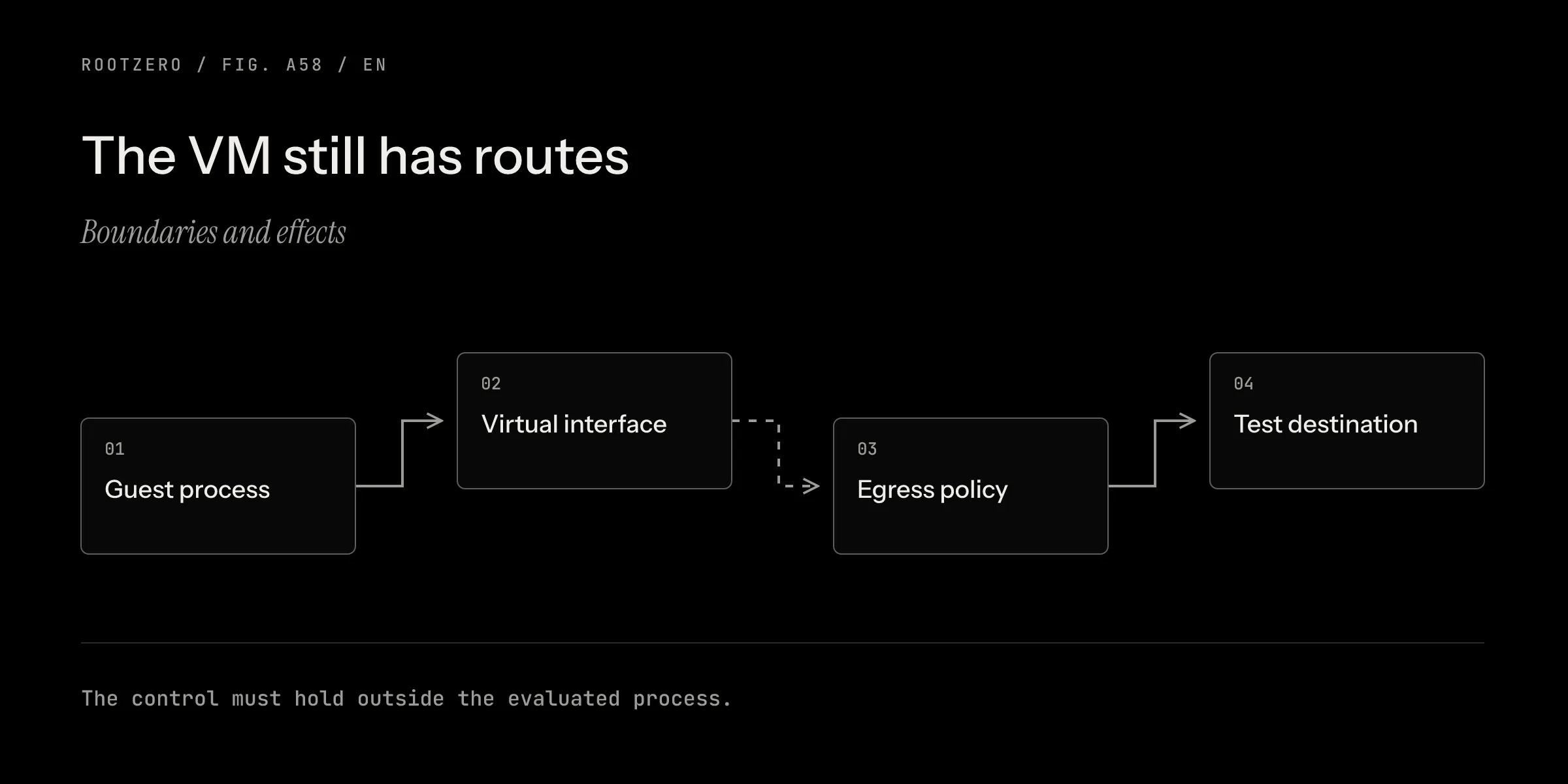
The control must hold outside the evaluated process.
Define the VM boundary
Record hypervisor, guest OS, interfaces, network mode, IPv4 and IPv6 routes, resolver and proxies. Include shared folders, exposed sockets, clipboard and integration services: some host paths bypass IP filtering entirely.
In an authorized Linux VM, these read-only commands provide an initial inventory:
ip -brief address
ip route
ip -6 route
cat /etc/resolv.conf
They do not measure containment. A displayed route describes configuration; controlled tests must establish actual reachability.
A Linux network namespace isolates resources including interfaces and routing tables while sharing the host kernel. VMs and network namespaces create different boundaries. Their results are not interchangeable.
Prepare receivers
Place identified test receivers only in authorized zones: lab network, test host and controlled external destination. Use a different marker for each attempt and record time at both ends.
| Path | Intended decision | Required observation |
|---|---|---|
| DNS through the approved resolver | Allow test names | Resolver trace |
| HTTPS through the required proxy | Allow the test receiver | Proxy trace and receipt |
| Direct HTTPS to that receiver | Deny | Outbound-control denial |
| IPv6 to that receiver | Follow defined scope | IPv6 route and result |
| Host service | Deny unless required | Host-side trace |
| Exposed share or socket | Follow integration contract | Observed access outside IP path |
An uninstrumented cell remains unmeasured. A timeout may reflect a fault or remote firewall; it does not establish that the intended control denied the request.
Test relevant alternate paths
Examine DNS and HTTPS separately. Blocking external resolvers does not prevent resolution through an HTTPS service when that channel remains unrestricted.
For a proxy, verify the actual destination, redirects and behavior during proxy failure. Direct fallback would change outbound scope. Name-based permissions also need comparison with the addresses actually contacted.
Repeat after reboot, address renewal and network interruption. A policy working only before reconnection does not describe the environment’s persistent state.
Keep enforcement outside tested authority
If the agent can alter its VM’s outbound rules, those rules do not independently constrain its authority. Administration must sit beyond a boundary it cannot reconfigure, with evidence retained outside the guest.
The same reasoning applies to credentials. An authorized cloud connection can offer a transfer channel through a permitted API. Restricting network destinations does not replace limiting that account’s actions and resources.
The final report should identify tested paths, destinations, identities and reconnection states, plus integrations left unassessed. Its defensible claim is observed denial on those specific paths while preserving access required for the intended work.