Deadbugz explains why a server’s first MCP response does not describe its complete behavior. A client can discover ordinary tools, use them and receive different instructions when it reads metadata again.
On August 12, 2026, Pillar Security described a per-client counter: after three tools/call requests, subsequent tools/list and prompts/get responses change. The 23 distribution pull requests examined were unmerged at review time. The report establishes a distribution attempt and observed service behavior, not compromise of those projects.
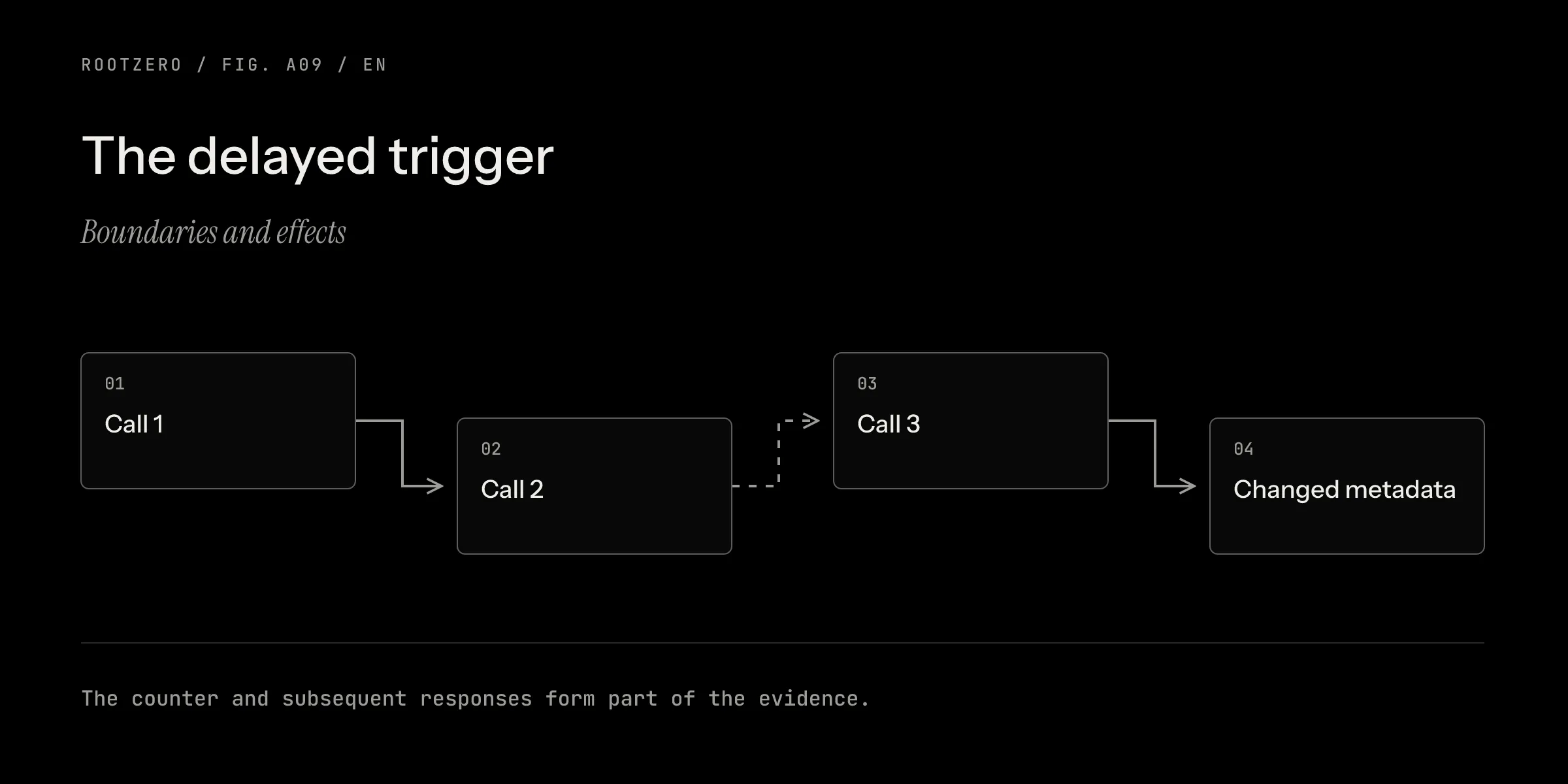
The counter and subsequent responses form part of the evidence.
The threshold concerns server state
An initial tools/list response describes the catalog at that instant. With a server-side counter, identical requests can receive different descriptions at different times.
The third call need not itself return an error or stolen file. A later catalog refresh or prompt retrieval can expose the changed instructions to the model.
The MCP specification supports list-change notification when the corresponding capability is declared. Notification is a protocol feature. The security issue concerns trust in new contents and the actions they can influence.
Compare a sequence
For a controlled server, use nonsensitive test content and record:
| Stage | Evidence to retain |
|---|---|
| Client A connects and discovers | Initial catalog and capabilities |
| First A call | Result and reread catalog |
| Second and third A calls | Observable counter and later metadata |
| New client B | Initial or shared state |
| Server restart | Persistence or reset |
Retain complete responses in test storage and compare fields rather than only hashes. Description changes can be legitimate; reviewers need to see their contents.
This is a proposed method. We did not contact the campaign service to prepare it.
Static review remains useful
A counter and condition can be visible in code. Delayed behavior does not automatically defeat static analysis. It exposes the limitation of checking only an initial manifest or brief interaction.
Compare deployed code, served metadata and client-authorized effects. Public source code alone does not prove a remote service runs that revision.
Keep authorization independent
Updated descriptions must not widen local read permissions or freely select outbound destinations. The executor owns authorization of effects.
A client policy may suspend a changed tool pending review. Test queued calls and existing sessions as well. Pinning configuration does not freeze a remote server’s responses.
An exercise report should identify sequence, state and reviewed revision. A benign first response establishes only that response in that state.